You already know what to do.
Drink more water. Move your body. Sleep. Set the phone down. Breathe before reacting.
And yet, somehow, the part of you that understands what you “should” do isn't choosing the actions that support your healthiest and most loving version of yourself.
For people who are tired of starting over and want to get unstuck, here are simple keys to lasting change.
Estimated reading time: 5 minutes
Heartmanity is proud to partner with outstanding companies that we wholeheartedly recommend, so this post may contain affiliate links. Thank you for supporting Heartmanity's mission!
So, the real question isn't, “What should I do?”
The real question to ask is:
“Why don’t I do what I already know would help me feel better?”
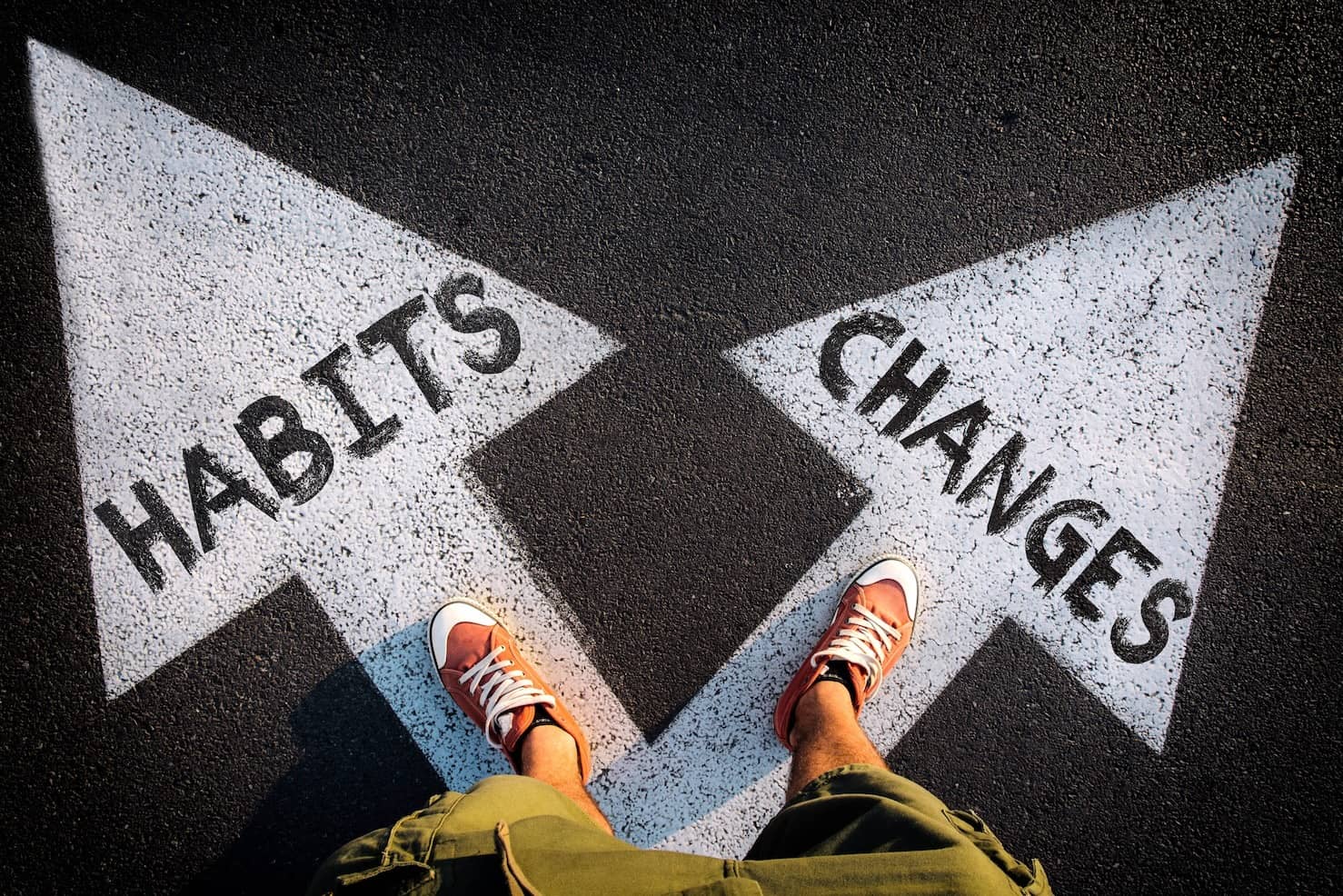
The answer is uncomfortable, but freeing: knowledge isn't the lever. Habit IS!
And habit lives below thought, in the brain's deeper circuitry, which is why information alone rarely changes behavior.
Once a routine has been repeated enough times, it migrates out of the prefrontal cortex (the slow, deliberate leadership part of you) and into the basal ganglia, where it runs on autopilot.
That's a gift when the habit is working for you. It's a quiet saboteur when it isn't.
The Foundation of Every Habit—for Better or for Worse!
Every habit—helpful or harmful—runs the same three-step loop, first mapped at MIT and popularized by Charles Duhigg:
Cue → Routine → Reward.
A stressful day (cue) leads to scrolling, a Netflix binge, or devouring a pint of Häagen-Dazs (routine), which produces relief (reward). The brain doesn't grade rewards on a moral scale as you might. It just notices what shifted your nervous system from “alarmed” to “okay,” tags it with dopamine, and queues it up for next time.
You don’t break a habit by forcing yourself to stop. You change it by giving the brain a different way to feel okay.
Related reading: "5 Breakthrough Healthy Habits for Weight Loss and Feeling Better."
How We Sabotage Ourselves with Ambition
Most of us don't fail at change because we lack discipline or motivation. We fail because we attempt a complete identity overhaul on a Monday.
New diet. 5 a.m. wake-up. Daily workout. Thirty minutes of meditation.
For a few days, it feels like momentum until a hard week hits and the whole stack collapses. Then we conclude we're just undisciplined.
The only thing that isn’t working is your strategy, not your discipline!
Behavioral scientists like Wendy Wood at USC and BJ Fogg at Stanford have spent decades demonstrating the same finding: small, repeatable actions outperform large, inconsistent ones. Tiny habits reduce the resistance that makes us quit, accumulate small wins that build confidence, and quietly shift the way we see ourselves.
On the hard days, you don’t run on motivation. You run on whatever you’ve built into your routine that’s easy, and running on autopilot.
Simple Guidelines to Changing Your Life Positively
Lasting change doesn't live on a checklist. It lives in three interconnected pillars where your daily choices either quietly support you or slowly drain you.
Let’s start with your physical health and vitality. It’s not about converting yourself to a vegetarian and starving yourself. It’s simple and even elegant when you start small.
Physical Habits.
Eat mostly whole foods. Move daily, even if it's a five-minute walk. Sleep on a consistent schedule. Neuroscience reveals short bouts of movement raise BDNF—sometimes called that Miracle-Gro for the brain—improving your mood, focus, and the very plasticity that makes new habits possible.
During deep sleep, your brain literally rinses itself through the glymphatic system. Skip it for too long, and the prefrontal cortex, the part of you that makes good choices, goes offline.
Secondly, your mind is the control station. The quality of your thoughts matters more than you may realize. How many of you have a harsh inner critic? Exhausting!
|
A personal example: On my busiest client days, exercise gets crowded out. So I placed a 10-pound weight next to the stove. Every morning while making coffee or tea, I do squats, toe raises, and push-ups. Cue: making my morning drink. Trigger: the weight sitting right there. Reward: my coffee — and time with my husband. Simple. Sustainable. Built into the life I'm already living. |
Small is BIG.
Remember that when you plan your next life change.
Mental Health and Mind Habits.
When it comes to the body or the mind, one of the most powerful things to do is practice mindfulness in daily life. Mindfulness applied to everyday life is a practice of intentional actions.
Mindfulness isn't a forty-five-minute, crossed-legged cushion practice.
The most usable form of being mindful is noticing your life as it's actually happening!
One intentional breath before responding.
A six-second pause before reacting.
A short pause isn't arbitrary. Six seconds i s roughly how long it takes the prefrontal cortex to come back online after the amygdala fires.
Practice it enough, and you literally widen the gap between stimulus and response.
Researcher Lisa Feldman Barrett in her book How Emotions Are Made calls the related skill emotional granularity: the more precisely you can name the emotion, and what's happening inside you, the more accurately your brain can act on it.
Relationship Habits.
The next area of our life that everyone is very familiar with is relationships. The people in your life are a major part of what makes us content. They are either nurturing and uplifting you or possibly draining you—everything in between.
Harvard's 84-year Study of Adult Development converged on one stubbornly simple finding: the quality of our relationships, more than money or fame, predicts how happy and healthy we will be.
After decades in a happy marriage, I can tell you our relationship isn't built on grand romantic gestures. It's built on daily habits: quality time together, genuine laughter, kindness, and attention to each other's goals and values.
And healthy boundaries are critical for healthy relationships. They protect your energy so you can show up authentically for the people and things that matter most.
The question is: what are you tolerating in your relationships? What relationship is bringing you the most joy and which ones are leaky lifeboats?
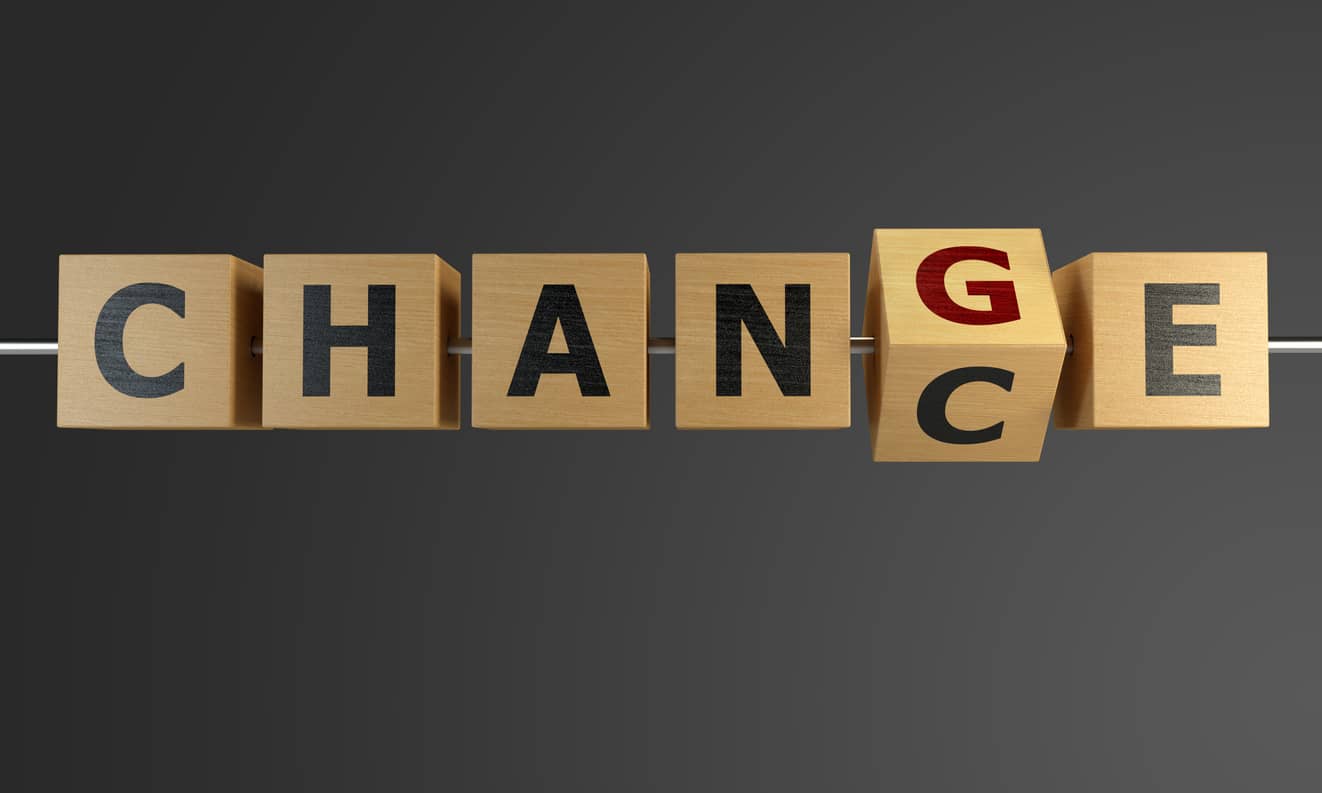
The word "chance" has only one letter difference from "change." Turn chance into life-transforming change with intentional, consistent actions.
Four Rules to Live by that Work for You, Not Against You
Four simple rules will transform your life and make every day build momentum toward a life you’ll love.
1. Start smaller than feels necessary.
If a new change feels too easy, you're doing it right. The key is to start small. Three push-ups is not a weaker workout than thirty—it's a better habit. You can increase repetitions and intensity AFTER it’s a habit!
2. Link new habits to existing ones for more effectiveness.
After brushing your teeth, take three deep breaths. After making coffee, one clear intention for the day. When you do things in this order, the existing habit then becomes the cue for positive action.
3. Design a supportive environment instead of relying on motivation.
Motivation fluctuates. Systems don't. Fruit on the counter. Phone out of the bedroom. Walking shoes by the door (unless you have a Bernedoodle that loves running away with shoes like ours!)
Make the healthy choice the easiest choice.
4. Track your emotional state, not just your actions.
Noticing how you feel before, during, and after a habit tells you an enormous amount about how you live and what habits will improve your life and relationships. Your emotions are messengers.
If and when you fall off, which is natural, take note!
Slipping isn't failure. It's part of being human. The research on habit recovery points to one surprisingly simple rule:
Don’t miss twice.
One missed day isn't a problem. Two missed days are the beginning of a new pattern. The moment you notice you've drifted, press reset —no judgment or shame spiraling. Just return. Gently, and as quickly as you can.
You don't need an overhaul. You need one habit. One shift. One small pattern you're genuinely willing to practice.
Helpful reading: "How to Change Habits and Create a Life You Love!"
Transformation doesn't come from what you do occasionally. It comes from what you practice every day — even when it's simple, even when no one is watching.
The goal isn’t perfection. The goal is awareness, intention, and a willingness to keep beginning again.
If this article resonated, share it with one person who's been trying to “finally get unstuck.”
To improve emotional intelligence and the everyday habits that shape a well-lived life, get customized support at Heartmanity. Reach out today!
For a brain fitness app, check this out! A fun way to keep your brain exercised!