
Have you ever felt a surge of anger and wished you could simply turn it off? For some of us, anger feels like a destructive force—a volatile emotion to be suppressed, controlled, or avoided. We fear its power when unleashed, especially how damaging it can be to relationships when our judgment is clouded.
But what if we’ve been looking at anger all wrong? What if, instead of a menace, anger was a gift?
Estimated reading time: 4 minutes
 Heartmanity partners with companies and products we wholeheartedly recommend so this post may contain affiliate links. As an Amazon Associate, I earn from qualifying purchases at no extra cost to you. You can read our full disclosure here. Thank you for supporting Heartmanity's mission and helping us provide free, quality content!
As an emotional intelligence coach with two decades of experience, I’ve guided countless individuals to transform their relationship with this powerful emotion. Anger isn’t the enemy. It is a vital messenger, a biological alarm system designed to alert us so we can take quick action.
When we learn to unwrap anger’s message, it becomes a profound tool for self-awareness, empowerment, and healing. It’s time to stop fighting—or fearing—our anger and start listening to its wisdom.
Recommended reading: “Anger Is Vital Energy!”
The Angry Iceberg: What Lies Beneath the Surface?
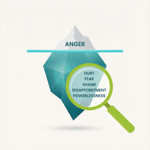
The intense, fiery feeling of anger is often just the tip of the iceberg. This metaphor, used widely in psychology, illustrates how the visible emotion of anger is often fueled by hidden, more vulnerable feelings simmering beneath the surface. When we react in anger, we are often masking deeper emotions that feel too difficult or unsafe to express, such as:
- Hurt or Sadness: A sense of loss or emotional pain.
- Fear or Insecurity: A feeling of being threatened or unsafe.
- Shame or Guilt: A belief that we are flawed or have done something wrong.
- Disappointment or Helplessness: A feeling of being let down or having no control.
When we only address the surface-level anger, we miss the opportunity to understand and heal the root cause. By courageously diving beneath the surface, we can identify what truly needs our attention. This is the first step toward transforming anger from a destructive outburst into a constructive force for change.
Deep dive: “Understand the Anger Iceberg: Learn 7 EQ Skills for Anger Management.”
Anger as Your Ally: A New Perspective
Neuroscience confirms that anger is a primal, adaptive response. As Dr. Daniel Siegel explains, when we feel threatened, our primitive "downstairs brain" can hijack our more evolved "upstairs brain," leading to reactive outbursts—a phenomenon he calls "flipping your lid." This quick reaction isn't a character flaw; it's a biological survival mechanism.
But here’s the paradigm shift: anger is not just a reaction; it is vital energy. It is a signal that a personal boundary has been crossed, a value has been violated, or a goal has been thwarted. When you feel anger, your body is giving you the fuel to take action. The key is to learn how to channel that energy constructively instead of letting it control you or lash out at another.
By reframing anger as a gift, we move from suppression or repression to curiosity and acceptance.
Now, we can ask, “What is this anger trying to tell me?” This simple question shifts us from a state of reactivity to one of mindful self-inquiry, opening the door to emotional regulation and profound personal growth.
Related reading: “How to Deal with Anger Effectively.”
How to Regulate Anger: A Step-by-Step Process for Emotional Regulation
Learning to regulate your anger doesn’t mean you’ll never feel it. It means developing the skill to feel it without being consumed by it. It’s about creating a space between the stimulus and your response, as Viktor Frankl so wisely stated: “In our response lies our growth and our freedom.”
Here is a practical, step-by-step process to help you unwrap the gift of anger and master emotional regulation.
Unwrapping the Gift of Anger

Step 1: Practice the Pause
When you feel the first spark of anger—a clenched jaw, a racing heart, a sharp tone—your immediate task is to do nothing—except PAUSE.
This one step can be the most critical and challenging step. A pause can be five seconds of deep breathing or a five-minute walk around the block. This space prevents the “downstairs brain” from completely taking over and allows your rational "upstairs brain" to come back online.
Actionable Tip:
Create a “pause plan.” Decide in advance what you will do when you feel anger rising. It could be repeating a mantra like, “I choose to pause," drinking a glass of water or splashing cold water on your face, or simply leaving the room.
Step 2: Acknowledge and Name the Emotion
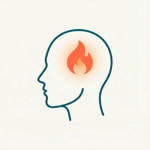
Once you have created some space, acknowledge the emotion without judgment. Say to yourself, “I am feeling angry.” Research shows that simply naming an emotion can help soothe the nervous system. This act of labeling moves the emotional processing from the reactive amygdala to the more thoughtful prefrontal cortex.
Actionable Tip:
Create an “emotion vocabulary list” on your phone or in a journal. When you feel anger rising, open the list and scan through words like frustrated, irritated, resentful, furious, or annoyed to find the most accurate label. The more specific you can be, the more effectively you'll engage your prefrontal cortex and calm your nervous system.
Step 3: Get Curious with Self-Inquiry
Now, approach your anger with curiosity. Ask yourself questions to get to the root of the feeling. This is where you explore what’s beneath the anger iceberg.
- “What am I really feeling right now?” (Hurt, disrespected, afraid?)
- “Was there a boundary that was crossed?”
- “What unmet need is this anger highlighting?” (A need for respect, safety, or appreciation?)
- “Is my reaction about the present moment, or is it connected to a past experience?”
This inquiry isn't intended as an opening to blame others or judge yourself, but to better understand your internal landscape. Different types of journaling can be a powerful tool for uncovering patterns and emotional triggers, and for gently continuing to unwrap the gift of anger.
Actionable Tip:
Keep a simple "anger journal" where you record three things each time you feel angry:
(1) What triggered the anger?
(2) What vulnerable feeling might be underneath (hurt, fear, shame, powerlessness)?
(3) What need was unmet? Over time, you'll begin to recognize patterns and anticipate your triggers before they escalate.

Step 4: Practice Self-Compassion
As you uncover the vulnerable emotions beneath your anger, it is essential to be kind to yourself. These feelings are valid. Self-compassion is the antidote to the shame and self-criticism that often accompany anger. Give yourself the same warmth and understanding you would offer a dear friend or a child.
Actionable Tip:
Develop a self-compassion phrase you can repeat when you uncover vulnerable emotions. Try something like, “It's okay to feel this way. My feelings are valid,” or “I'm doing my best and growing every day." Place your hand over your heart as you say it to activate the calming power of touch.
 Step 5: Choose a Constructive Action
Anger creates dissonance within us; a loud static that swells up until it's released. With your new insight gained from your self-inquiry, you can now use the energy of your anger to take effective action rather than increase chaos and strife. This self-control is where anger becomes a true gift, motivating you to create positive change.
Constructive actions might include:
- Setting a Boundary: “I feel disrespected when I'm interrupted. I would like to finish my thought.”
- Expressing a Need: “I feel overwhelmed and need some help with this project.” Or “I feel hurt when you cancel our dates at the last minute.”
- Making a Change: “This situation (behavior, person, substance, etc.) is unhealthy for me, and I need to make a change.”
- Self-Soothing: Engaging in an activity that calms your nervous system, such as walking in nature, listening to music, or practicing mindfulness.
Actionable Tip:
Before taking action, ask yourself: "Will this response bring me closer to or further from the outcome I truly want?" This simple question helps you evaluate whether your action aligns with your values and long-term goals, ensuring your response is constructive rather than reactive.
Related reading: “How to Apply Maslow’s Hierarchy of Needs in Everyday Life.”
The True Gift of Anger
When we learn to see anger not as an inconvenient emotion or a problem to be fixed but as a messenger to be heard and honored, we unlock its true power for change.
The gift of anger brings self-awareness. It is the energy to protect our boundaries, advocate for our needs, and honor our deepest values. It is a catalyst for growth and a pathway to more authentic and connected relationships.
To get personalized support, contact Heartmanity at support@heartmanity.com.